Introduction to NY Maintenance Duration Guidelines Table
Understanding the NY maintenance duration guidelines table is essential for individuals navigating the complexities of divorce in New York State. Spousal maintenance, often referred to as alimony, is a critical component that needs careful consideration during divorce proceedings. This article aims to provide a comprehensive analysis of the maintenance duration guidelines, offering insights into how these norms can impact both parties involved in a separation.
What is Spousal Maintenance?
Spousal maintenance is a financial obligation established by a court that typically requires one spouse to provide ongoing support to the other following a divorce. This support acknowledges the contributions each partner made during the marriage, especially in instances where one spouse may face economic hardship in the aftermath of the separation. The law in New York strives to be equitable, taking into account several factors such as the length of marriage, income differences, and the lifestyle of both parties during the union.
Importance of NY Maintenance Duration Guidelines Table
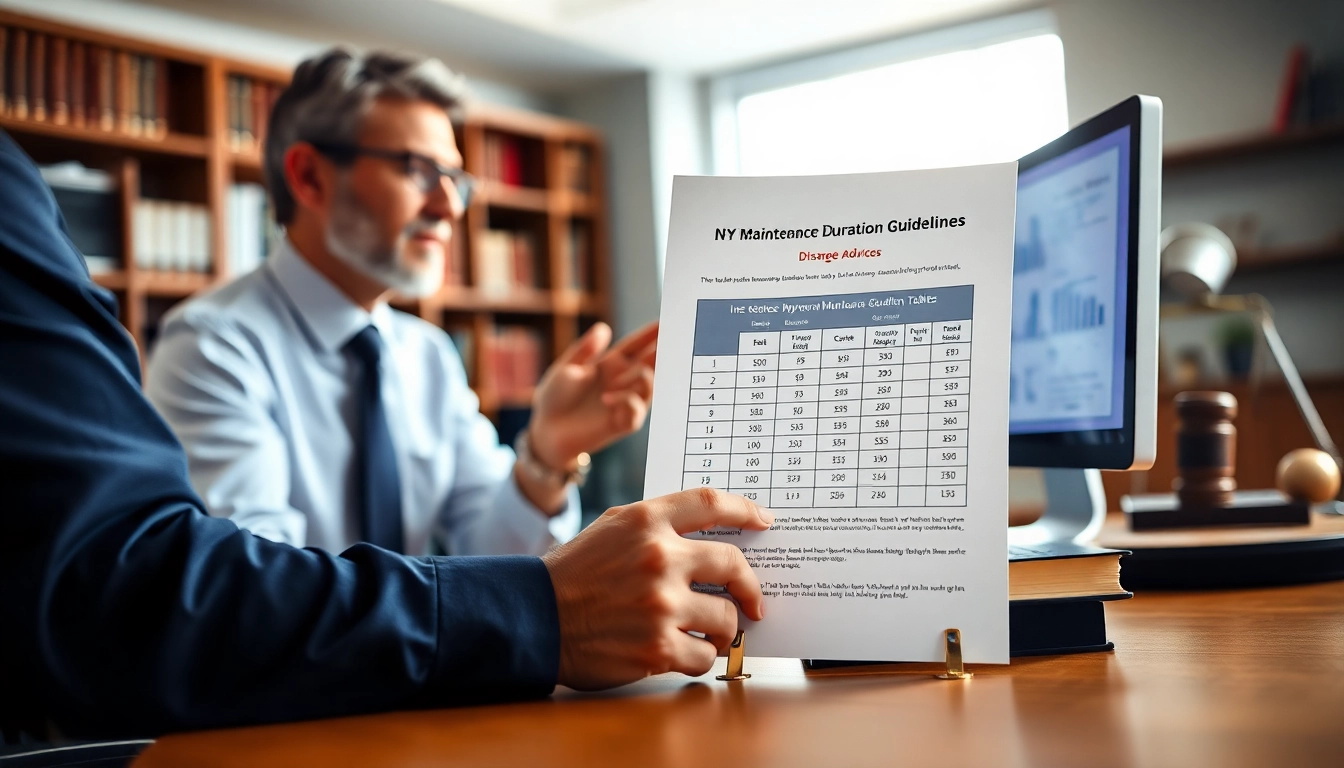
The NY maintenance duration guidelines table serves as a fundamental tool in determining the appropriate length and amount of marital support payments. It provides a framework that judges, lawyers, and individuals can rely upon to gain clarity on what to expect in terms of maintenance duration based on the length of marriage. Following these guidelines not only helps streamline the process but also brings transparency and predictability to financial settlements during divorce.
How to Use the Guidelines Effectively
Effectively utilizing the NY maintenance duration guidelines table involves understanding its recommendations and integrating them into negotiations or court presentations. Individuals should assess their personal circumstances in relation to the guidelines, including retirement ages, potential earning capacities, and lifetime support needs. Consulting with a legal professional can help clarify any complexities and ensure that all relevant factors are accounted for.
Duration Based on Marriage Length
Marriage Length: 0 to 15 Years
For marriages lasting from zero to fifteen years, the advisory duration of spousal maintenance typically spans between 15% to 30% of the duration of the marriage. This means that if a couple was married for ten years, a typical maintenance period may range from approximately 1.5 to 3 years. This percentage is recommendatory; courts retain the discretion to modify it based on various circumstances, including the economic landscape at the time of divorce.
Marriage Length: 15 to 20 Years
In marriages that last between fifteen and twenty years, maintenance duration recommendations increase. Courts may look to award maintenance for approximately 30% to 40% of the marriage's duration. For instance, if a marriage lasted eighteen years, maintenance payments could be expected for roughly 5.4 to 7.2 years. Factors such as the recipient's age, ability to work, and the lifestyle established during the marriage all play significant roles in determining the final award.
Marriage Length: More than 20 Years
For individuals married for over twenty years, the guidelines typically suggest a duration of maintenance payments ranging between 35% to 50% of the length of the marriage. For example, a couple married for twenty-five years may have maintenance obligations for an estimated 8.75 to 12.5 years. This considerable timeframe reflects that longer marriages often create deeper economic interdependencies, thereby necessitating prolonged support.
Factors Influencing Maintenance Duration
Income Disparity
One of the most significant factors affecting maintenance duration is the disparity in income between spouses. A higher earning spouse may be required to provide more extended support if the other spouse earned significantly less or has been out of the workforce for an extended period. Courts look to balance economic inequities to ensure that both parties can maintain a standard of living that is somewhat consistent with their marital lifestyle.
Age and Health of the Parties
The age and health of the divorced individuals also come into play, as older or less healthy spouses may have a more challenging time re-entering the workforce. In cases where one spouse is significantly older or has health issues that prevent employment, the duration of maintenance might be extended beyond standard guidelines, ensuring fair support consistent with their needs.
Contributions During the Marriage
A spouse's contributions during the marriage—both financial and non-financial—significantly impact the duration and amount of maintenance awarded. This includes raising children, supporting the household, or even forgoing career opportunities to benefit the other spouse’s career. The courts acknowledge these sacrifices and may grant more favorable maintenance terms to ensure equity.
Calculating Maintenance Duration
Percentage of Marriage Length
The core of calculating maintenance duration is directly tied to the length of the marriage and the associated percentage guidelines outlined above. Using these percentages provides a straightforward method for determining potential maintenance terms. However, it's essential to remember that these are starting points rather than rigid rules.
Modification of Duration
Spousal maintenance agreements are not set in stone; they may be modified over time based on changing circumstances. If either spouse experiences a significant change in income—such as a job loss, career advancement, or remarriage—their ability to pay or need for maintenance can become different. Courts are typically flexible in accommodating these changes, provided they are justified.
Example Calculations
To better illustrate how maintenance duration is calculated, let’s consider a hypothetical couple married for twelve years. According to the guidelines, they may expect maintenance to last between 1.8 to 3.6 years (15% to 30% of the marriage duration). If specific factors suggest a higher-than-normal duration due to income disparity or other conditions, the court may increase this estimate significantly, so it's crucial to factor in these elements during negotiations.
FAQs about NY Maintenance Duration Guidelines Table
What is the general rule for maintenance duration in NY?
The general rule for maintenance duration in New York is based on the length of marriage, with suggested percentages ranging from 15% to 50% of marriage duration, depending on how long the marriage lasted.
Can maintenance payments be modified?
Yes, maintenance payments can be modified. If there are significant changes in either spouse's financial situation or circumstances, the court may adjust the amount or duration as necessary.
What factors do judges consider for maintenance duration?
Judges consider various factors like income disparities, age, health, and contributions made during the marriage when determining maintenance duration.
Is there a maximum duration for maintenance payments?
While there is no strict maximum duration set for maintenance payments, the guidelines suggest shorter durations for marriages of less than fifteen years, typically not exceeding half the length of the marriage for longer unions.
How can I calculate my expected maintenance duration?
To calculate expected maintenance duration, reference the NY maintenance duration guidelines table, which correlates marriage length with suggested percentages to determine the duration of payments.