
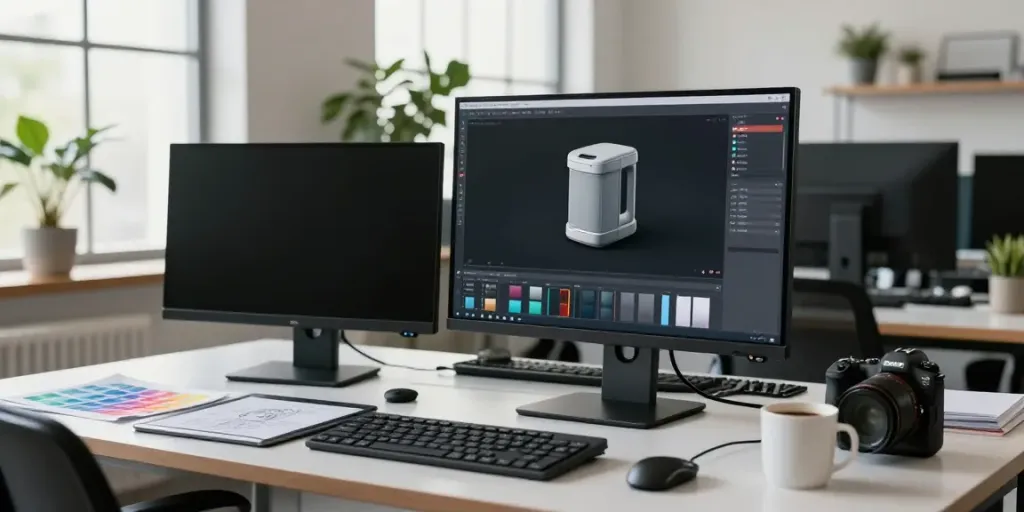
Understanding 3D Product Visualization Software
In an increasingly digital world, businesses across various industries are recognizing the profound impact of 3D product visualization software on customer engagement and sales conversion. This revolutionary technology enables customers to explore products in an interactive and immersive way. By providing a detailed, three-dimensional view of products, companies can create a more engaging shopping experience, allowing potential buyers to visualize how a product fits into their lives before making a purchase. This article delves into what 3D product visualization software entails, its significance, and how it's shaping the future of consumer interactions.
What is 3D Product Visualization Software?
3D product visualization software is a category of digital tools that allows for the creation of three-dimensional models of products. These applications enable users to generate photorealistic images and animations that can be utilized in marketing, product design, and customer interaction. At its core, this software transforms a static image of a product into a dynamic, interactive model that can be rotated, zoomed in on, and explored in detail. This transition from two-dimensional imagery to a fully interactive 3D model enhances the presentation of the product, making it easier for customers to grasp its features and functionality.
The Importance of Visualization in Product Design
Visualization plays a critical role in product design, serving not only to showcase products but also to facilitate the design process itself. By using 3D visualization software, designers can create accurate representations of their ideas and concepts, allowing for better communication with stakeholders, including engineers and marketers. This collaborative approach minimizes misunderstandings and accelerates the development timeline by enabling early feedback and adjustments. Furthermore, visualizations can help identify potential design flaws or manufacturing challenges before production begins, saving time and resources.
Key Features of Effective 3D Visualization Tools
- Realism: High-quality rendering capabilities that produce lifelike images.
- Interactivity: Users can manipulate the model, view it from different angles, and customize options.
- Integration: Compatibility with other design tools and platforms, enabling smooth workflows.
- Measurement Tools: Features that allow users to take accurate dimensions and compare sizes.
- AR/VR Support: Options for augmented and virtual reality experiences to enhance user interaction.
Benefits of 3D Product Visualization Software
Enhancing Customer Engagement and Satisfaction
The primary advantage of 3D product visualization software lies in its ability to enhance customer engagement. In an era where consumers expect a higher level of interaction, businesses that leverage this technology can provide an enriching experience. Customers are more likely to feel invested in products they can interact with extensively. By enabling prospects to visualize products in their settings, companies foster a stronger emotional connection, leading to higher conversion rates and customer satisfaction.
Streamlining the Design Process
Another key benefit is the ability to streamline the design process. With 3D visualization, teams can collaborate more effectively, share ideas in a clear format, and identify issues early on. This reduces the likelihood of costly revisions that can occur when working solely with two-dimensional designs. As a result, businesses can bring products to market faster, enhancing their competitiveness.
Creating Accurate Prototypes and Models
3D product visualization allows for the creation of highly accurate prototypes, which are invaluable for testing and evaluation. Designers can produce virtual prototypes to assess functionality and aesthetics without incurring the costs associated with actual physical models. This not only saves resources but also allows for rapid iteration, as changes can be made quickly in the software before any physical production takes place.
Challenges in Implementing 3D Product Visualization
Common Misconceptions About 3D Visualization
Despite the many advantages, there are misconceptions about 3D product visualization software. One common belief is that it is only suitable for large companies with significant budgets. In reality, a range of solutions exists that cater to businesses of all sizes, allowing even smaller enterprises to harness this technology effectively. Additionally, some organizations may believe that incorporating 3D visualization is a complex process that requires extensive training; however, many modern platforms are designed to be user-friendly with intuitive interfaces.
Technical Limitations and Solutions
Technical limitations can pose challenges when implementing 3D visualization software. Issues such as software compatibility, hardware requirements, and internet bandwidth can hinder effective use. However, these challenges can often be mitigated by selecting the right software that is optimized for different systems and by ensuring that teams have the necessary training to utilize the tools effectively. Regular software updates and support can also address many technical issues as they arise.
Cost Considerations and Budgeting
Cost is another significant consideration when adopting 3D product visualization technology. Businesses must weigh the initial investment against the long-term benefits and potential savings. While some software solutions may have higher upfront costs, their advanced features can lead to increased sales and customer satisfaction, making them a worthwhile investment. Businesses should consider their specific needs and budget to find a solution that provides the best return on investment.
Best Practices for Using 3D Product Visualization Software
Integrating Visualization into the Design Workflow
To maximize the benefits of 3D product visualization software, businesses should integrate these tools into their design workflow from the outset. This includes the initial concept phase, allowing teams to visualize ideas in real-time and make informed decisions about product design and development. Collaboration across departments—marketing, engineering, and sales—should be encouraged to ensure that everyone is aligned and leveraging the technology effectively.
Collaborating with Clients and Stakeholders
Effective collaboration with clients and stakeholders is crucial for successful adoption. Providing clients with access to 3D models can facilitate discussions and feedback, leading to more tailored products that meet their needs. By involving customers early in the process, businesses can build trust and foster long-term relationships, leading to increased loyalty and repeat business.
Measuring the Impact of Visualization on Sales
It is essential to measure the impact of 3D product visualization on sales and customer engagement. Businesses should track metrics such as conversion rates, customer satisfaction scores, and feedback on the visual experience. By analyzing this data, companies can identify areas for improvement and fine-tune their strategies, ensuring they continue to maximize the effectiveness of their visualization efforts.
The Future of 3D Product Visualization Software in 2026 and Beyond
Emerging Trends and Technologies
The landscape of 3D product visualization is rapidly evolving, with numerous trends shaping its future. One significant trend is the increasing adoption of augmented reality (AR) and virtual reality (VR) technologies, which provide even more immersive experiences for customers. As these technologies become more accessible, businesses will be able to offer interactive experiences that allow customers to visualize products in their environments in a way that was previously unimaginable.
Predictions for the Industry's Evolution
As we move toward 2026, it is expected that 3D product visualization software will become an integral part of the e-commerce landscape. More consumers will expect to interact with products in 3D before making a purchase, and businesses that do not adopt these practices may fall behind their competitors. This evolution will also likely see improvements in AI-driven customization, where visualizations can adapt based on user preferences and behaviors, enhancing the personalization of the shopping experience.
How to Stay Ahead in the 3D Visualization Market
To stay ahead in the ever-evolving 3D visualization market, businesses must remain adaptable and open to adopting new technologies. This includes investing in training for staff to ensure they are capable of using advanced tools and staying informed about industry trends. Networking with other professionals and engaging with user communities can also provide valuable insights and foster innovation within an organization.
What are the advantages of using 3D product visualization software?
The advantages include enhanced customer engagement, streamlined design processes, and the ability to create accurate prototypes. These benefits contribute to improved sales and customer satisfaction.
How does 3D visualization improve the customer buying experience?
3D visualization improves the buying experience by allowing customers to interact with products in a realistic manner, helping them visualize how a product fits into their lives and making informed decisions.
What industries benefit most from 3D product visualization?
Industries such as furniture, automotive, and consumer electronics heavily benefit from 3D product visualization, as these sectors rely on customers being able to see and understand complex products from various angles.
Are there free options for 3D product visualization software?
While many advanced features come with paid software, some free options exist that offer basic functionalities. It's important for businesses to assess their needs and choose a solution that provides the right balance of features and cost.
What skills are needed to effectively use 3D visualization tools?
Effective use of 3D visualization tools typically requires a combination of design, technical, and software skills. Familiarity with graphic design concepts, understanding of 3D modeling, and experience with specific software platforms are all beneficial.